
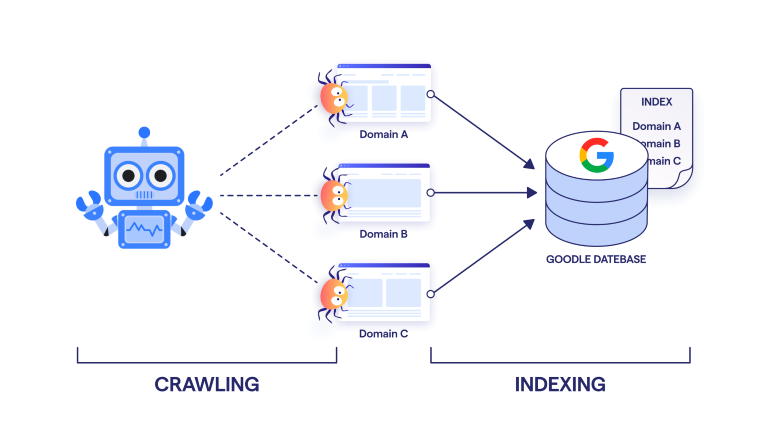
What is Indexing in SEO?
When it comes to search engine optimization (SEO), one of the most important concepts to understand is indexing. Without proper indexing, your website content will not appear in search results, no matter how well-optimized it is. In simple terms, indexing is the process that allows search engines like Google, Bing, or Yahoo to store and organize your website’s information so it can be displayed to users when they search for relevant queries.
How Does Indexing Work?
Search engines use three main steps to display results:
- Crawling
- Search engine bots (also called crawlers or spiders) scan websites across the internet, following links from one page to another.
- These bots collect information about the content, structure, and keywords of each webpage.
- Indexing
- After crawling, the collected data is processed and stored in a huge database known as the search engine index.
- This index is like a library where every webpage is cataloged based on its topic, keywords, and relevance.
- Ranking
- When a user performs a search, the search engine looks through its index and delivers the most relevant and useful results based on its ranking algorithms.
In short, if your site isn’t indexed, it cannot rank.
Why is Indexing Important in SEO?
- Visibility – Without indexing, your website won’t show up in search results.
- Traffic Growth – Indexed pages are eligible to drive organic traffic.
- Content Discovery – Helps search engines understand and categorize your content.
- Competitive Advantage – Well-indexed sites often gain more visibility than poorly indexed competitors.
Factors That Affect Indexing
Several elements influence how quickly and effectively your site is indexed:
- Website Structure
- A clean, logical structure with proper navigation makes it easier for crawlers to find and index pages.
- Sitemaps
- Submitting an XML sitemap to search engines ensures they know which pages to crawl and index.
- Internal Linking
- Proper internal linking allows crawlers to discover deeper pages on your site.
- Mobile-Friendliness
- Since Google uses mobile-first indexing, mobile-optimized websites are prioritized.
- Page Speed
- Fast-loading pages are easier for crawlers to process, improving indexing chances.
- Duplicate Content
- Too much duplicate content can confuse search engines and prevent proper indexing.
- Robots.txt and Meta Tags
- If misconfigured, these can block crawlers from indexing important pages.
How to Check if Your Website is Indexed
You can use the following methods:
- Google Search – Type site:yourdomain.com in the Google search bar. This will show all indexed pages from your domain.
- Google Search Console – Use the URL Inspection tool to check if a specific page is indexed.
- Third-Party SEO Tools – Tools like Ahrefs, SEMrush, and Screaming Frog also provide indexing status.
How to Improve Indexing in SEO
- Submit Your Sitemap to Google Search Console
- Fix Crawl Errors by monitoring reports in Google Search Console.
- Optimize Internal Linking to make it easier for crawlers to navigate.
- Use High-Quality Content that is original, useful, and keyword-rich.
- Avoid Thin Pages with little or no valuable content.
- Build Backlinks from authoritative sites to encourage crawlers to find your content faster.
- Ensure Fast Loading Speed to enhance both user experience and crawlability.
Common Indexing Issues
- Pages blocked by robots.txt
- Pages with noindex meta tags
- Canonicalization errors (multiple versions of the same page)
- Poor website structure making deep pages hard to reach
- Orphan pages (not linked to from anywhere on the site)
Final Thoughts
Indexing is the backbone of SEO. Even if you publish high-quality content, it won’t matter if search engines can’t index it. By ensuring your website is crawlable, structured, and optimized for indexing, you increase the chances of ranking higher in search results and attracting consistent organic traffic.
In SEO, indexing is the bridge between publishing and ranking. If you want your website to succeed, you must focus on proper indexing strategies as part of your overall SEO efforts.